

The Pompon Hat – A reconstruction attempt for the 1390s
What can I say, I just needed to make this hat. I dreamed of it for years. It’s not my time of impression, it’s not the kind of status character I can offer, but I had to make it.
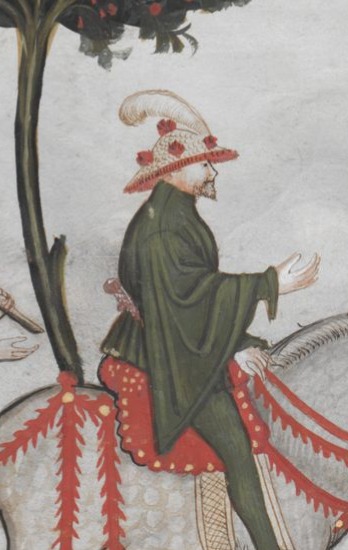
Cod. Ser. n. 2644, S. 178: Tacuinum sanitatis: Vinum citrinum, Österreichische Nationalbibliothek” (Nutzung)
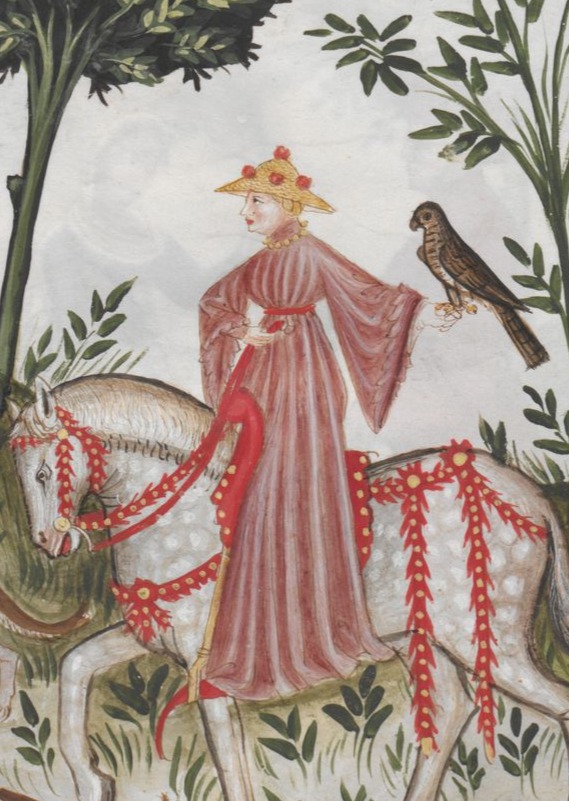
Cod. Ser. n. 2644, S 138: Tacuinum sanitatis: Perdices, Österreichische Nationalbibliothek” (Nutzung)
The first step with this kind of reconstruction is to look at sources first. As was to be expected, most of them are from issues of the Tacuinum sanitatis
Sources you need to see on this:
Wiener Tacuinum sanitatis, ÖNB Ser. n. 2644 (1380-1399)
Cod. Ser. n. 2644, S. 56: Tacuinum sanitatis: Spargus
Cod. Ser. n. 2644, S. 96: Tacuinum sanitatis: Siligo
Cod. Ser. n. 2644, S 111: Tacuinum sanitatis: Ertas
Cod. Ser. n. 2644, S 138: Tacuinum sanitatis: Perdices
Cod. Ser. n. 2644, S. 178: Tacuinum sanitatis: Vinum citrinum
Theatrum Sanitatis, Biblioteca Casanatense, Rome, MS 4182 (or MS 459), late 14th century
Liege – MS 1041, Tacuinum sanitatis (1380-1400)
Man muss hier leider blättern, wichtig sind die Seiten 18, 57, 58 und 106
Tacuinum Sanitatis BNF – Ms. Lat 9333 (1445-1450)
BNF – Ms Lat 9333, fol 23r, Ibn Butlan, Tacuinum Sanitatis: Sparagus
BNF – MS Lat 9333, fol 85v, Ibn Butlan, Tacuinum sanitatis: Gelber Wein
BNF – MS Lat 9333, fol65v, Ibn Butlan, Tacuinum sanitatis: Rebhühner
BNF – MS Lat 9333, fol 52r, Ibn Butlan, Tacuinum sanitatis: Sommer
Also:
Nycolaus de Lyra, Postilla super libros Iosue, Iudicum, Ruth, Esdrae, Iob, Universitätsbibliothek Basel, A II 3, (ca. 1397), Folio 88 r
Anovelo da Imbonate, illuminator, around 1400. “Aimo and Vermondo go hunting”
Einzug Christi in Jerusalem, Glasfenster aus Kärnten um 1390, Stiftskirche Viktring
Runkelstein, Südtirol, Wandmalereien, spätes 14. Jahrhundert
Book of Hours, MS S.5 fol. 8r, 15. Jahrhundert
Rocca Albornoziana. Camera pinta. Affreschi, Spoleto, Perugia
Harvard University, Houghton Library MS Lat 250, um 1475
Ich hab hier ein paar von den Quellen gesammelt, leider konnte man nicht alle pinnen
You may already see in these sources, hats in a conical shape aren’t unusual, I sorted out illuminations that clearly show jewish people here, because that is its own type of hat, but you can find loads of conical hats in those cases too. Several of the hats look like they have some kind of “scaling” or “shingle” structure. Now you could easily reach this structure by using a bundle of straw like you would in a thatched roof (we know this technique from extand neolithic hats f.e.), but that seemed to be a pretty crude technique for a hat that a nobleman lines with silk and takes out riding.
Since I know there are different medieval extant straw bands out there in different shapes and braiding techniques, specifically from the Lengberg finds (I am very sorry, I can not publicly show these finds without permission), I made the speculative jump to another form of straw band with these scales. To be clear about this, this form of straw braid has not been found in extant straw braids, even the ones I have seen from Lengberg. Personally, I am very happy with the effect of the scaling.
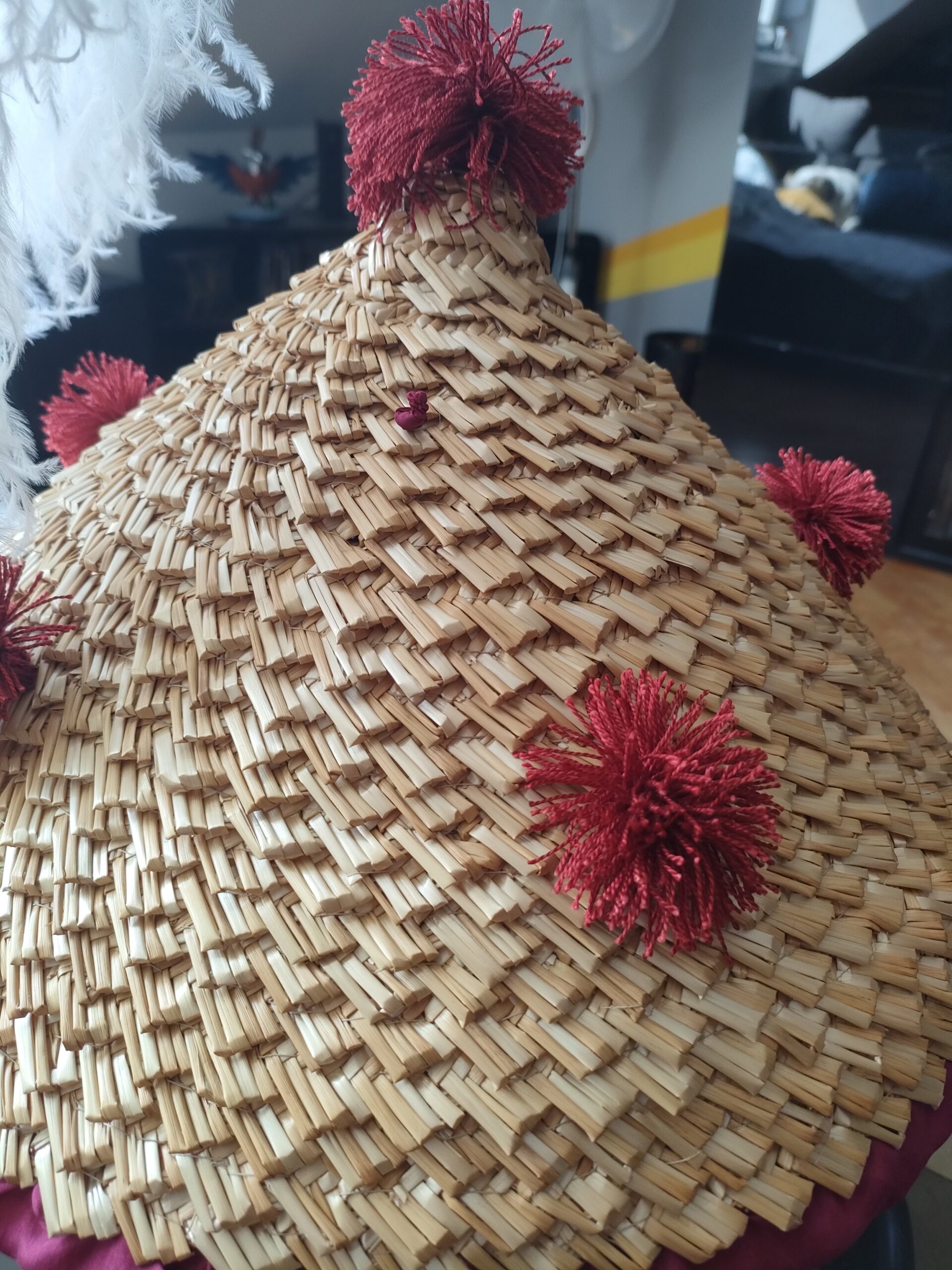
The form is achieved by simply sewing the braids together, as we know it from several extant straw hats.
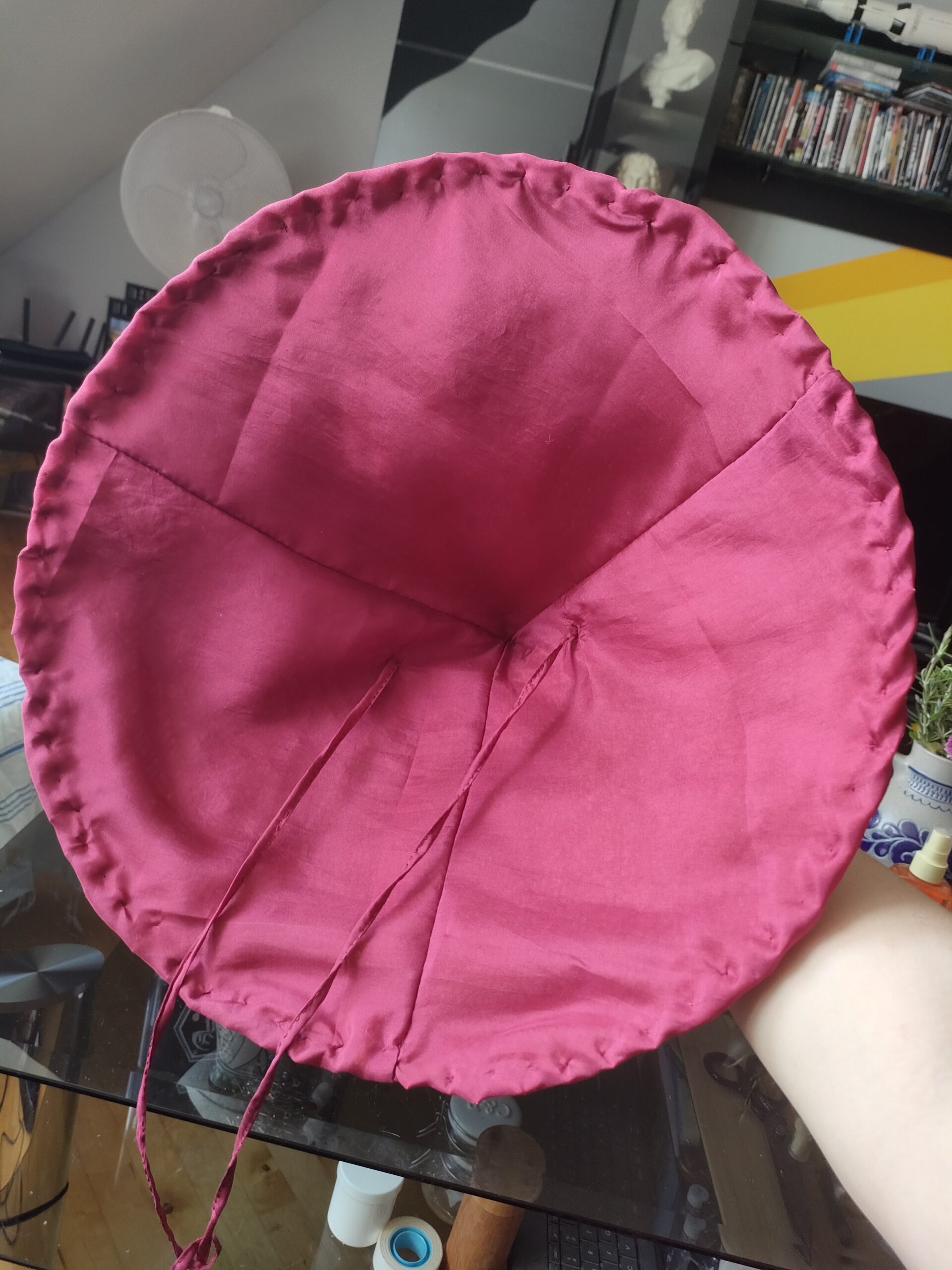
The pompons shown on the original illuminations, I interpreted as thick tassles, sewn onto the hat. I reconstructed them from madder dyed silk. The red line on the bottom of the hat, I understood as a kind of lining, which also makes sense for a hat of this class. I lined the hat in brazil wood dyed silk and made two ribbons from the same silk to hold the hat on the head.
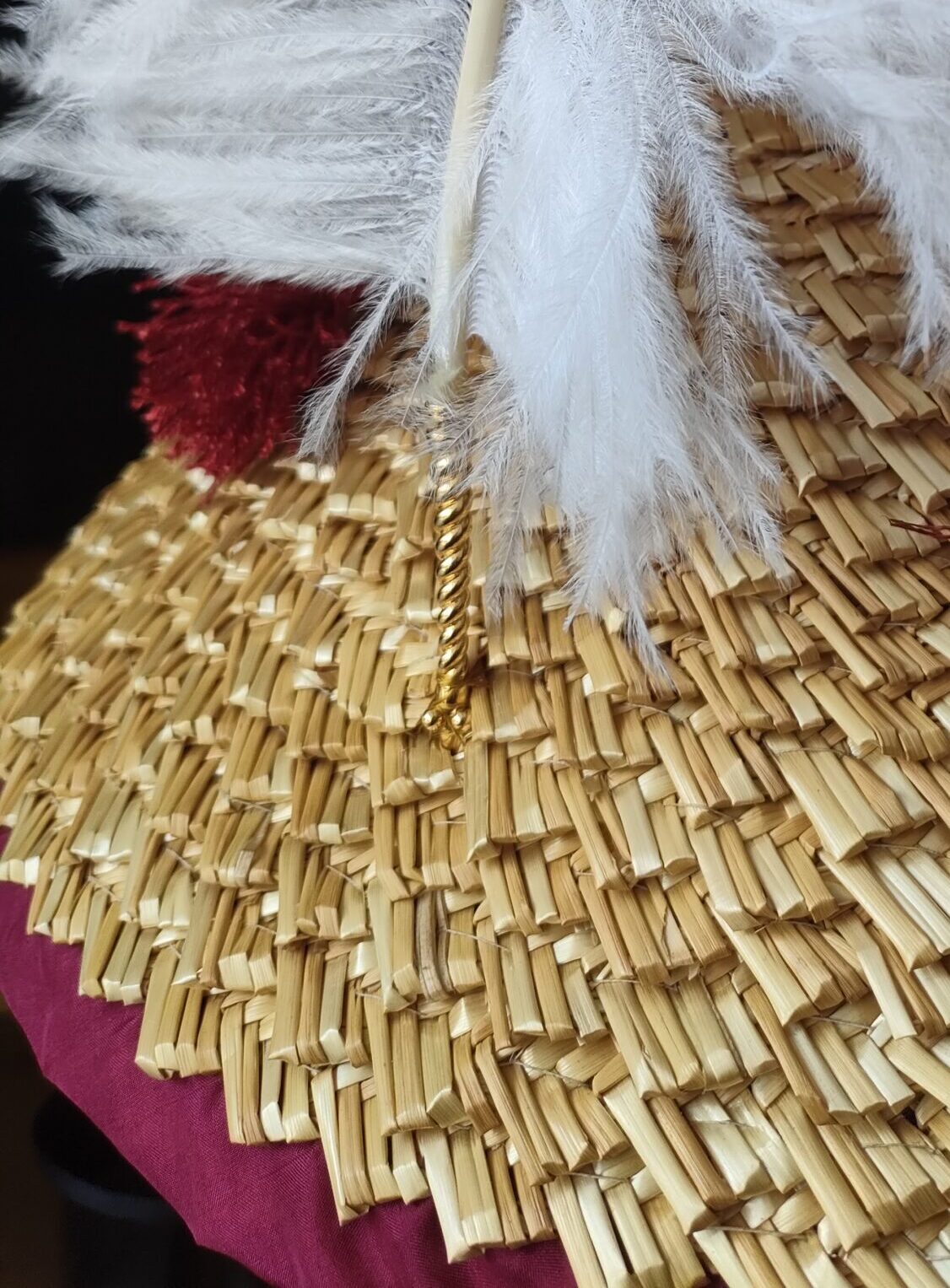
What I actually fought with, was how to attatch the feather to the hat. Sure, you could just stick it into the straw. But that seemed way too banal for me. As far as I know, there are no extant plume holders for hats in archeological finds and no detailed depictions of plume holders. Some illuminations show a faint golden line at the bottom of the feather.
I therefor used a gilded lacepoint, stuck it into the straw and sewed it to the hat for more hold and it does what it’s supposed to do. The feather is ostrich, I don’t think that is a controversial take given the form in the original illumination.
And this is what the whole thing looks like:
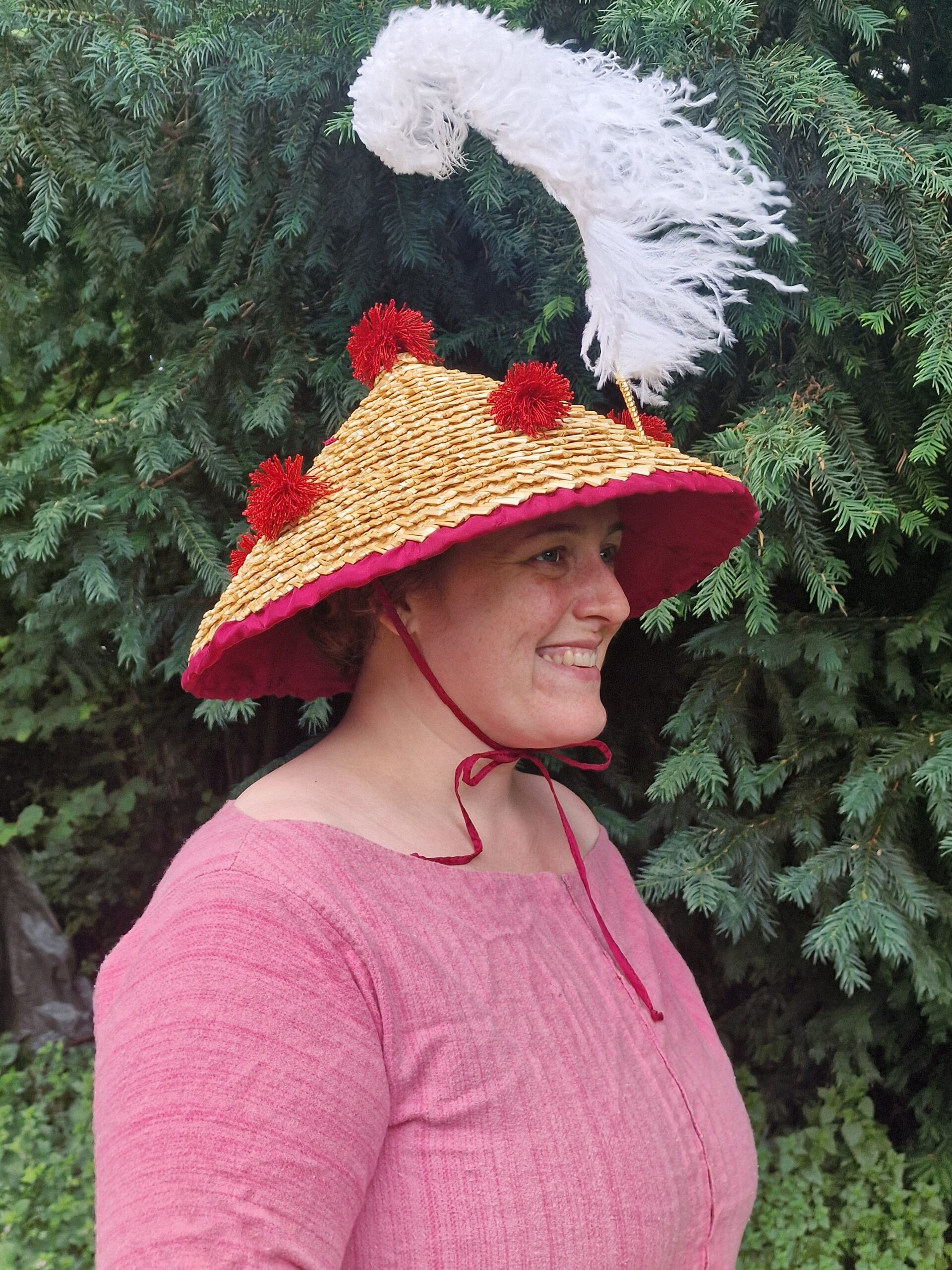
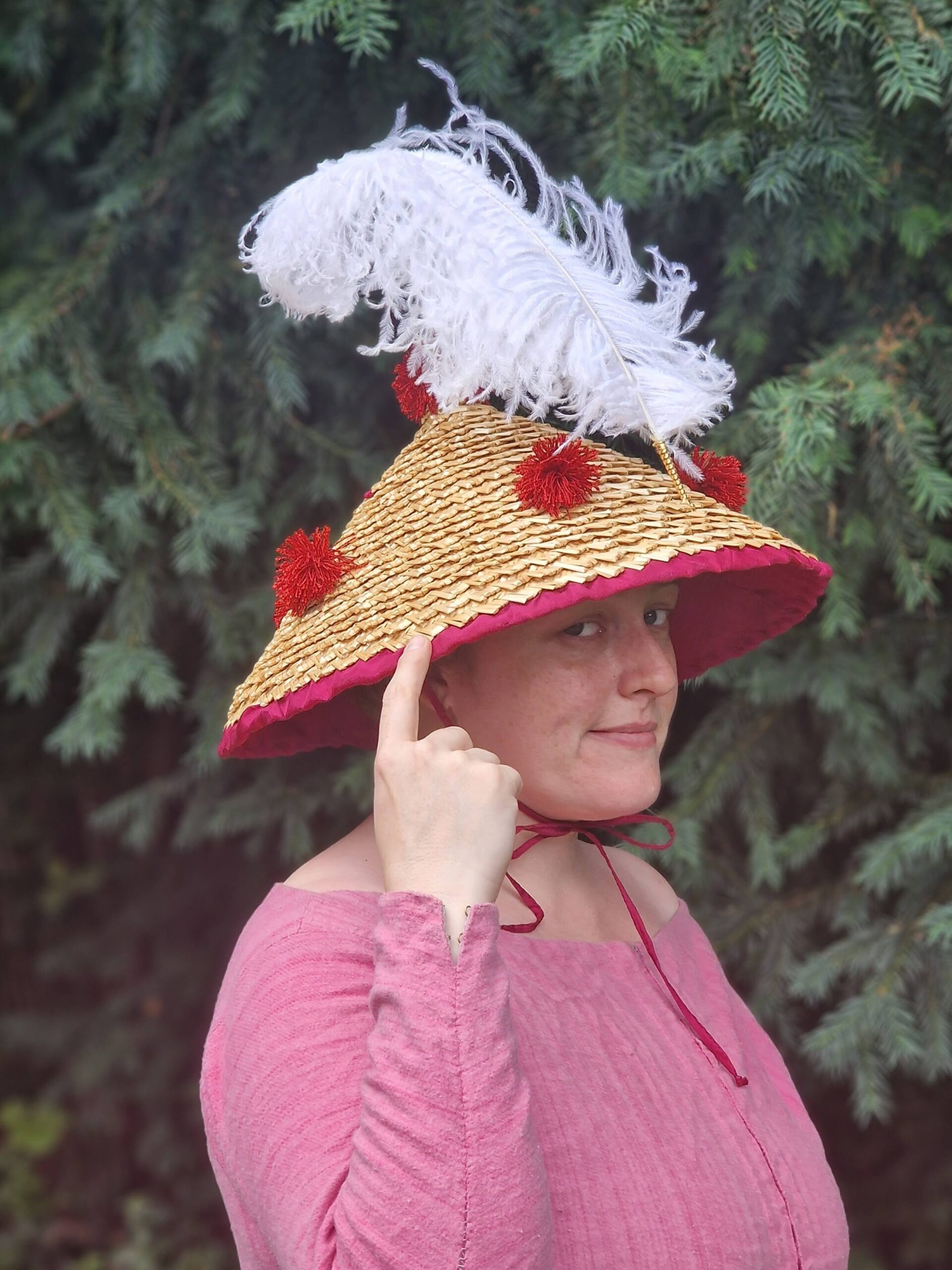
The question remains, what to do with this one. I have nothing to wear with it and no use for it :-D
Related Posts
The following posts might interest you as well: